The Margin at the End of the Power Line
Artificial intelligence has the cost structure of heavy industry and the profit structure of software. The costs arrive on bills nobody itemizes; the profits are called innovation. An enthusiast asks why the public has not yet connected the two.
In 2022 ExxonMobil earned $55.7 billion, the largest annual profit a Western oil company had ever reported. The White House called the figure outrageous. Windfall taxes were proposed in Washington and enacted in Brussels; Ireland set its levy at 75 percent and Slovenia at 80. The political logic fit on a bumper sticker: gasoline is expensive, oil companies are rich, therefore oil companies are rich because gasoline is expensive. (Exxon, The Hill, Tax Foundation)
Four years later NVIDIA reported $215.9 billion of revenue for its fiscal 2026, a gross margin of 71.1 percent, and operating income of $130.4 billion, more than twice Exxon's record year, though the two measures are not strictly comparable. Gross profit alone was about $153 billion, or some $420 million a day. Nobody proposed a windfall tax. The margins were described, in the financial press and in Congress alike, as the reward for innovation. (NVIDIA Q4 FY2026 release)
Both descriptions may be correct. Oil is a commodity and accelerators are a product; Exxon found its asset in the ground and NVIDIA designed its own. But the mechanism that produced the two profits is the same one: demand outran supply of something the world badly wanted, and the owner of the scarce thing collected the difference. The question worth asking is not why the profits differ but why the vocabulary does. I ask it as someone who uses these tools all day and expects to use them more, which is to say as a customer rather than a critic, and as someone who has spent a good deal of his working life among the transformers and turbines the rest of this essay is about.
Nobody sees the AI price on a sign
The first answer is visibility. Gasoline has the misfortune of advertising its price in six-foot illuminated numerals at every major intersection in America. When the number goes from $2.75 to $4.75, the consumer knows exactly what has happened to him and roughly who did it.
The costs of the AI buildout have no such sign. They are real, and they are large. The International Energy Agency puts global data-center electricity consumption at 415 terawatt-hours in 2024 and expects about 945 TWh in 2030, slightly more than Japan uses in a year. In the United States, data centers are expected to account for nearly half of all electricity demand growth to 2030, adding roughly 240 TWh. That figure is easier to feel in capacity than in energy: it is about 30 gigawatts of new average load, the output of some fifty 600-megawatt combined-cycle plants running flat out, or more electricity than New York State consumes. (IEA)
But the 240 TWh does not arrive as a line on anyone's bill. It arrives as a transformer that costs twice what it did, a turbine slot that is five years away, a rate case in a state the data center is not in, a memory module that costs a computer buyer more, a municipal water study, a transmission plan with a new zero on the end. Each of those is somebody's problem. None of them has NVIDIA's name on it, and no highway sign connects them.
The causal chain is also longer. Exxon sold the thing whose price was angering the consumer. NVIDIA sells nothing to the homeowner whose bill went up; it sells to hyperscalers, who sell to enterprises and to the public at prices that have little to do with the cost of the electricity behind them. The demand propagates backward through half a dozen independent markets before it reaches a household, and by then the causation is diluted past the point where anyone could reasonably assign it. That is not a conspiracy. It is simply what a long supply chain does to responsibility.
How a data center in one county reaches a bill in another
The industry's answer to the cost question is that the data center pays its own way. Increasingly, for the direct costs, it does. Large-load tariffs now assign the interconnection, the dedicated substation and the new feeder to the customer that caused them, and utilities will point to those tariffs as proof that the matter is handled.
What the tariffs do not touch is the utility's ordinary program: the replacement transformer that was going to be bought anyway, the switchgear on a routine substation refresh, the new combined-cycle unit intended to retire a 1970s steam plant that burns a third more fuel per megawatt-hour. Every one of those now costs roughly twice what it did three years ago and waits years longer, and every one of them goes into rate base and earns the utility's allowed return, paid by all of its customers, including those who will never live within five hundred miles of a GPU.
The doubling is not a figure of speech. In Kentucky, LG&E and KU sought approval for Mill Creek 5, a 640 MW combined-cycle unit, in 2022, and for Mill Creek 6, a nearly identical unit, in 2025. The utilities' own report to the state commission this year records "an approximate 50% increase in cost" between the two, and a filing in their resource-plan docket puts the longer arc at more than doubled, from $1,008 to $2,121 per kilowatt since the 2021 plan. They also paid GE Vernova $25 million simply to reserve a manufacturing slot for 2030. In South Carolina, Santee Cooper's estimate for its Canadys plant went from $994 per kilowatt in its 2023 plan to $2,415 in this year's certificate application, a 98 percent increase in three years. NextEra's chief executive has said the cost of a new gas plant has tripled since its Dania Beach unit was approved in 2022. Lazard's annual cost survey moved its combined-cycle range from $650 to $1,300 per kilowatt in 2023 to $1,450 to $2,100 in 2026, with the note that even that had "not yet reached the levels of recently observed quotes." The federal government's own reference figure, in the Energy Information Administration's assumptions, still sits near $1,000, about half of what a utility can actually buy for. (LG&E/KU project report, KIUC comments, Kentucky Lantern, Santee Cooper testimony, Utility Dive, Lazard, EIA)
The turbine makers are candid about the cause. GE Vernova told investors in January that new slot reservations were priced 10 to 20 points above its existing backlog, in April that 2026 orders would price 10 to 20 points above the fourth quarter, and in July that the first half had come in more than 20 percent above it. Compounded, that is the doubling the utilities are reporting. Reuters found lead times of 160 weeks for generator step-up transformers, and Wood Mackenzie expects data centers to account for as much as 40 percent of the power-equipment market by the end of the decade in its accelerated case. (GE Vernova, Reuters)
An economist will object, correctly, that a higher transformer price is a signal, not a harm. In a market where buyers can respond to prices, the increase merely tells them to buy less, or later, or something else. The objection is worth conceding, because it delivers the point. The residential ratepayer is the one party in the whole chain who cannot respond. He cannot substitute, cannot exit, cannot renegotiate, and does not choose what his utility buys or when. He is a captive customer of precisely the kind that infrastructure regulation exists to protect, and he is the only place in the chain where the word infrastructure is being applied in its full regulatory sense.
There is a second channel, subtler than price. Once a turbine's lead time exceeds a utility's planning horizon, price stops doing the rationing and queue position does it instead. The Electric Power Research Institute says a large turbine ordered today is five to seven years from operation; Santee Cooper's own testimony plans on seven to eight. The manufacturers describe three years, which is true of their slot books and false of the buyer's calendar. Queue position, unlike price, is bought by whoever can commit capital fastest. A hyperscaler or a well-funded developer can reserve a 2031 slot on a board decision. A regulated utility generally cannot: it needs a certificate of need before it commits ratepayer money, and a speculative turbine reservation is exactly the kind of expenditure a commission disallows after the fact. The utility is therefore last in the queue, not because it is slow but because it is regulated. When the lights flicker in 2029, the public will blame the utility for failing to build, and the utility will have been the one buyer that was forbidden to jump the line. (S&P Global, Utility Dive)
The costs are not only pecuniary. The 1970s steam plant that cannot be retired because its replacement has no turbine keeps burning its extra third of fuel for years past its planned death, which is an operating cost and, for readers who count such things, an emissions cost. Water is a local matter rather than a national one; some cooling designs use very little and others a great deal, and the relevant question in a dry county is not what share of the nation's water a data center uses but whether a new industrial user is competing for a scarce local supply. That distinction, between modest aggregate shares and large marginal local effects, runs through the whole subject. A gigawatt does not spread itself evenly across a continent. It arrives in one place, on one grid.
Where the campuses are, and where the money is
That place is rarely where the money ends up. The gigawatt-scale AI campuses are being built in Abilene, Texas; in Richland Parish, Louisiana; in Pike County, Ohio; outside Memphis; and across Loudoun County, Virginia, because those are the places with electricity, land and a utility willing to sign. The firms that own the accelerators, the models and the clouds are headquartered, and their equity is held, somewhere else, in a handful of metropolitan areas that host no gigawatt campus and will not. This is not a scandal; it is how capital-intensive industry has always arranged itself. But it means that the county that hosts the load, absorbs the traffic, hears the turbines and shares the substation is generally not the county that books the surplus, and the two are seldom introduced. Opposition to new data centers now comes from county commissions of every political color, which is a fact worth noticing in itself.
Innovation rent, scarcity rent, and the test between them
None of this argues that NVIDIA's margins are undeserved. The company did not find a deposit of accelerators under Texas. It designed a product, spent two decades on the architecture, built the CUDA ecosystem around it and anticipated a market most of the world missed. A large share of its return is innovation rent in the ordinary sense, and the law agrees: American competition law does not punish high prices or high margins as such. It requires exclusionary conduct, an anticompetitive agreement or an unlawful merger, which is why the Federal Trade Commission could block NVIDIA's purchase of Arm in 2021 on the ground that it would let the company stifle rivals, while nothing stops NVIDIA from charging what customers will pay for a chip it designed itself. (FTC)
What keeps the margin on the innovation side of the line is competition, or the credible threat of it. AMD can design a better accelerator; Google has TPUs, Amazon has Trainium, Microsoft has Maia; model developers can find ways to need fewer chips. As long as those alternatives are real, NVIDIA can say its margins are not extracted from captive customers but paid by willing ones, and the threat of substitution does the work that regulation does in older industries. That defense is powerful, and it is testable. If customers can substitute when NVIDIA's prices become unattractive, the margins will invite competition and erode, as innovation rents do. If they cannot, because CUDA, networking and the installed base make the company unavoidable, then the margins are scarcity rents wearing innovation's clothes.
Which raises the question this essay has been circling. At what point does NVIDIA cease to be merely a very successful supplier to the AI industry and become the infrastructure through which the AI industry must pass?
The company's own recent conduct suggests it is not a passive subject of the test. In August it agreed to invest $1.5 billion in SB Energy and, according to its filing with the SEC, to guarantee up to $105 billion of residual value on OpenAI's leases at an eight-gigawatt campus in Pike County, Ohio, should OpenAI default, on the condition that the campus host NVIDIA compute exclusively. In September it agreed to buy Hugging Face, the platform through which most open models are distributed, for about $12.9 billion, with a promise to keep it open to other silicon. Reporting in August described a $917 million loan to the cloud provider Lambda, secured by GPUs and by NVIDIA's own contracts, whose proceeds buy NVIDIA GPUs, in a structure where NVIDIA is at once investor, supplier, largest customer and counterparty. Earlier it had committed to buy CoreWeave's unsold capacity through 2032 and put $30 billion of equity into OpenAI. Bloomberg has twice described the pattern as reviving fears of circular financing; analysts at Bernstein and elsewhere have compared it to the vendor financing of the telecom boom; NVIDIA has published a rebuttal denying that any of it is vendor financing at all. Whichever description is right, a firm that finances its customers' purchases of its own product, guarantees the buildings they sit in on condition of exclusivity, and buys the marketplace through which rivals' models reach developers has taken positions on both sides of the substitution test. The margin is, in part, funding its own demand, and the ecosystem is being arranged so that leaving it costs more each year. (NVIDIA 8-K, Aug 17 2026, NVIDIA 8-K, Sep 3 2026, CoreWeave 8-K, Bloomberg, Fortune, CNBC)
None of it is illegal, and the essay does not claim otherwise. But there is precedent for what regulators do when a carrier begins to own the cargo. The railroads' original sin was not their rates; it was owning the anthracite fields whose coal they hauled, so that a competing mine could not reach the market on equal terms. Congress answered in 1906 with the commodities clause of the Hepburn Act, forbidding a carrier to transport goods it had produced. Standard Oil's version was the pipelines and the rebates. In each case the regulator's first move was not to cap the margin but to separate the layers. The technology industry calls AI infrastructure, and the word is doing two jobs at once. In one sense it means something many other activities depend on, and AI companies invoke that sense enthusiastically. In the other it means a capital-intensive network industry so essential and so concentrated that society imposes obligations on its owners, and the answer to whether that second sense will ever apply to NVIDIA is not "never," because the FTC has already applied it once, over Arm.
The ledger nobody keeps
So here is the arrangement as it stands. The costs of the buildout, pecuniary, environmental, inflationary and civic, land on ratepayers, counties and utilities that did not choose them and cannot refuse them. The surplus concentrates at a small number of firms two or three markets upstream, at margins that in any industry called infrastructure would attract a regulator's attention and in this one attract admiration. The household at the end of the power line pays its share through a bill it does not itemize and receives its share, if it receives one, through products whose prices are hidden by design. Both sides of its ledger are invisible to it. Whether it came out ahead is not a question anyone can answer, and that is not an accident of the accounting; it is the structure.
None of this requires believing that artificial intelligence is a mistake. The willingness of capital to pour into the buildout is decent evidence that the thing being built is worth having, and NVIDIA's margins are, among other things, a measure of how much more the world values what its chips enable than what they cost to make. The objection is not to the surplus. It is that the split between the people who bear the costs and the firms that book the surplus was set by rate-case procedure and equipment queues, not by any market the cost-bearers participate in, and nobody asked them.
Oil companies learned what happens when the public connects scarcity, household costs and record earnings: the connection was bad economics, and it produced windfall taxes on two continents anyway. The AI case is better economics, and it fits on no bumper sticker, which is why it has produced nothing. The stickers now being printed about data centers and electricity bills are, for once, pointing the right way, though for reasons their printers would struggle to state; they have the direction right and the mechanism wrong, and the mechanism is what this essay has tried to supply. The sticker, not the truth, decides who pays. This essay will not fit on one. That is rather the point.
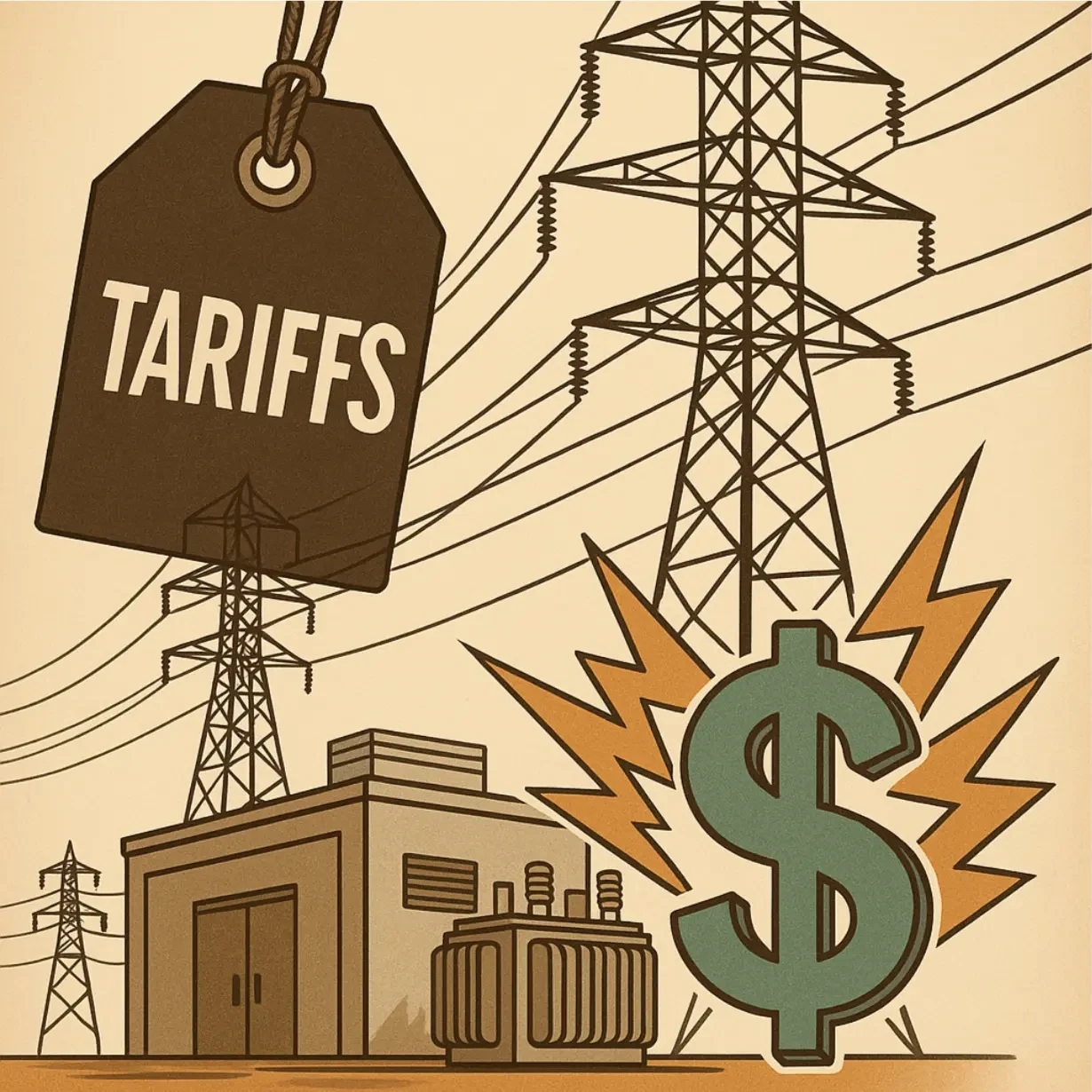
Tariffs and Transformers: How U.S. Trade Policy Is Reshaping Energy Infrastructure in the Age of AI
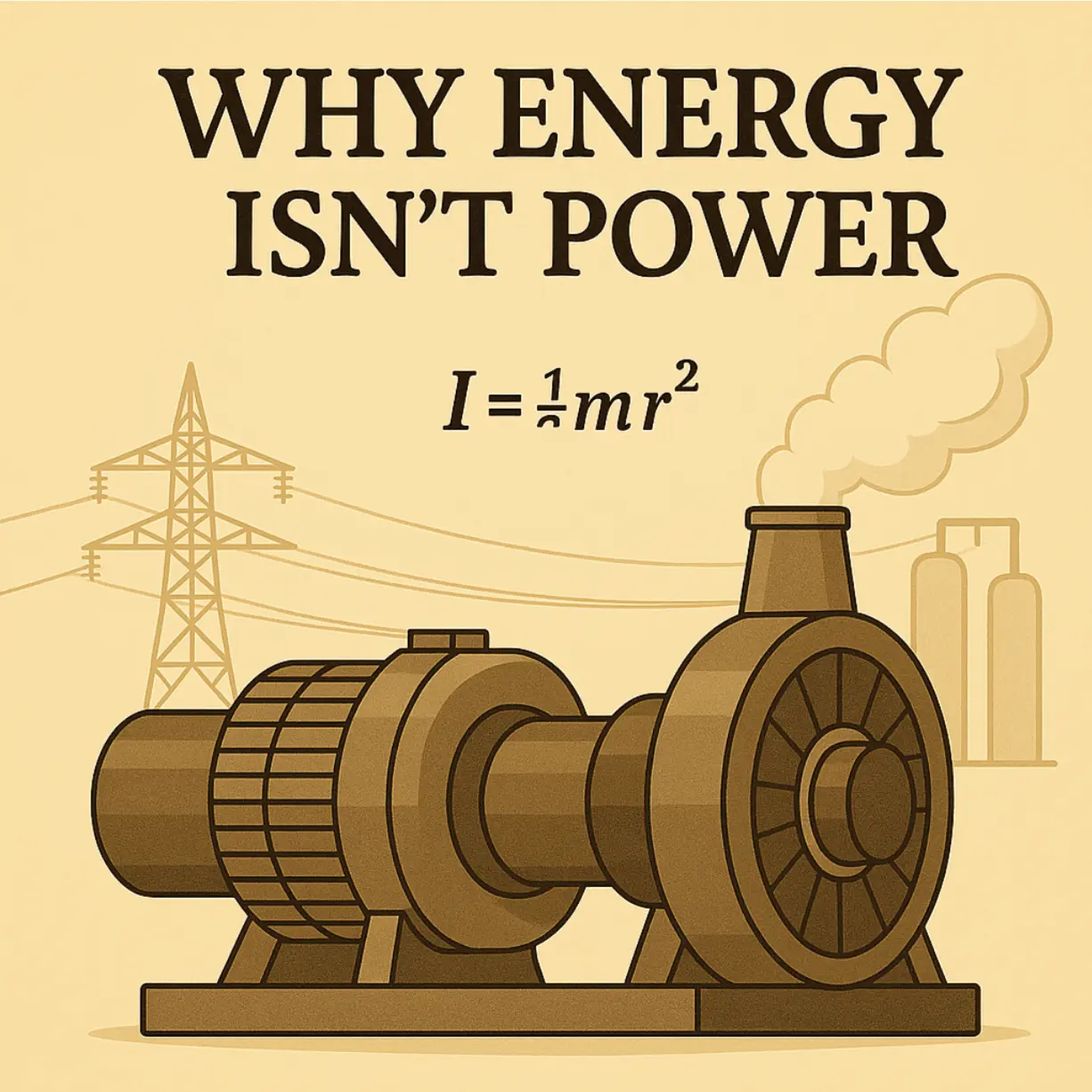
Why Energy Isn’t Power—And Why That Distinction Still Confuses Policymakers

Running the Grid, Running the Cloud
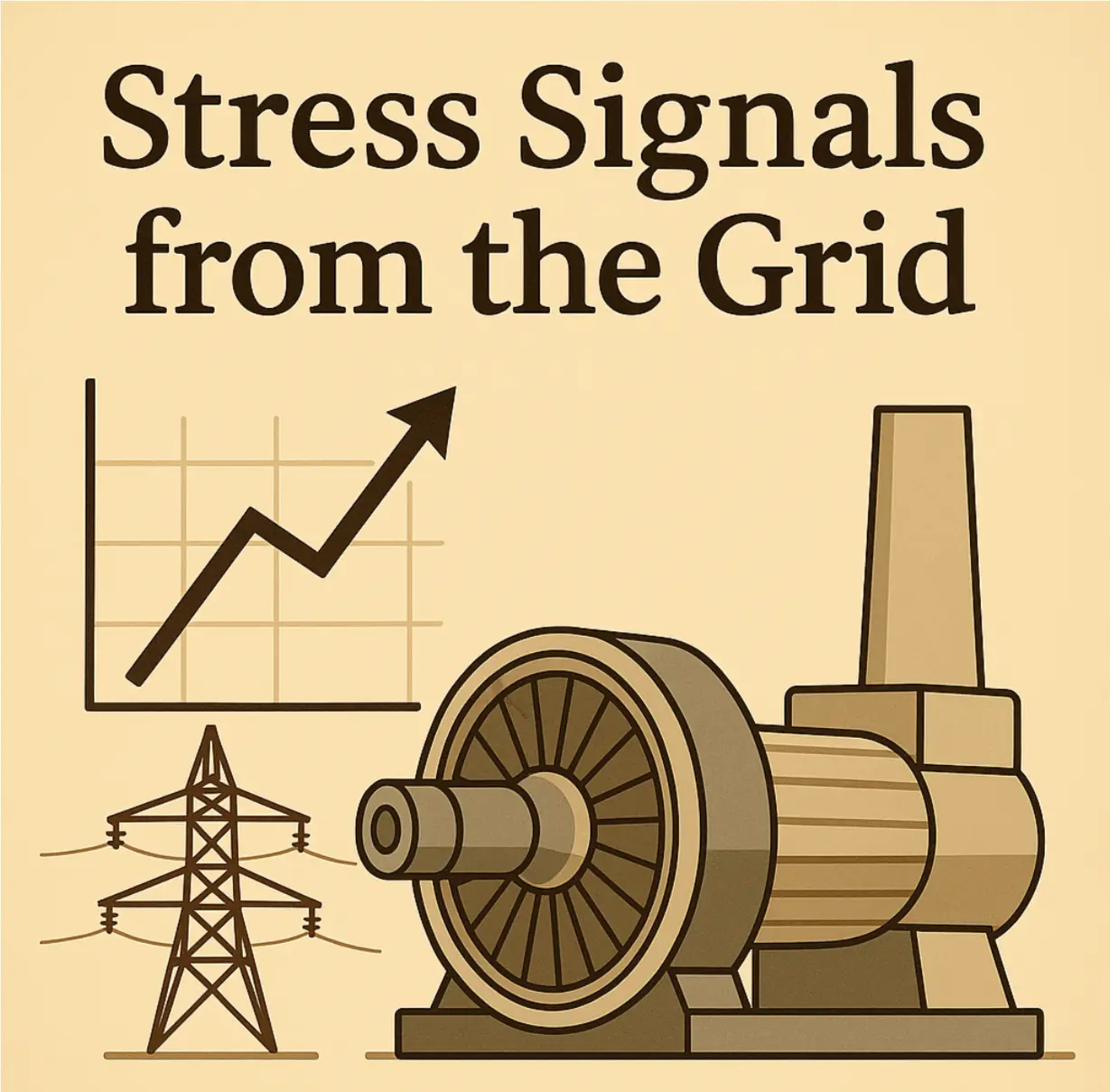
Stress Signals from the Grid: What the 2025/26 MISO Capacity Auction Reveals