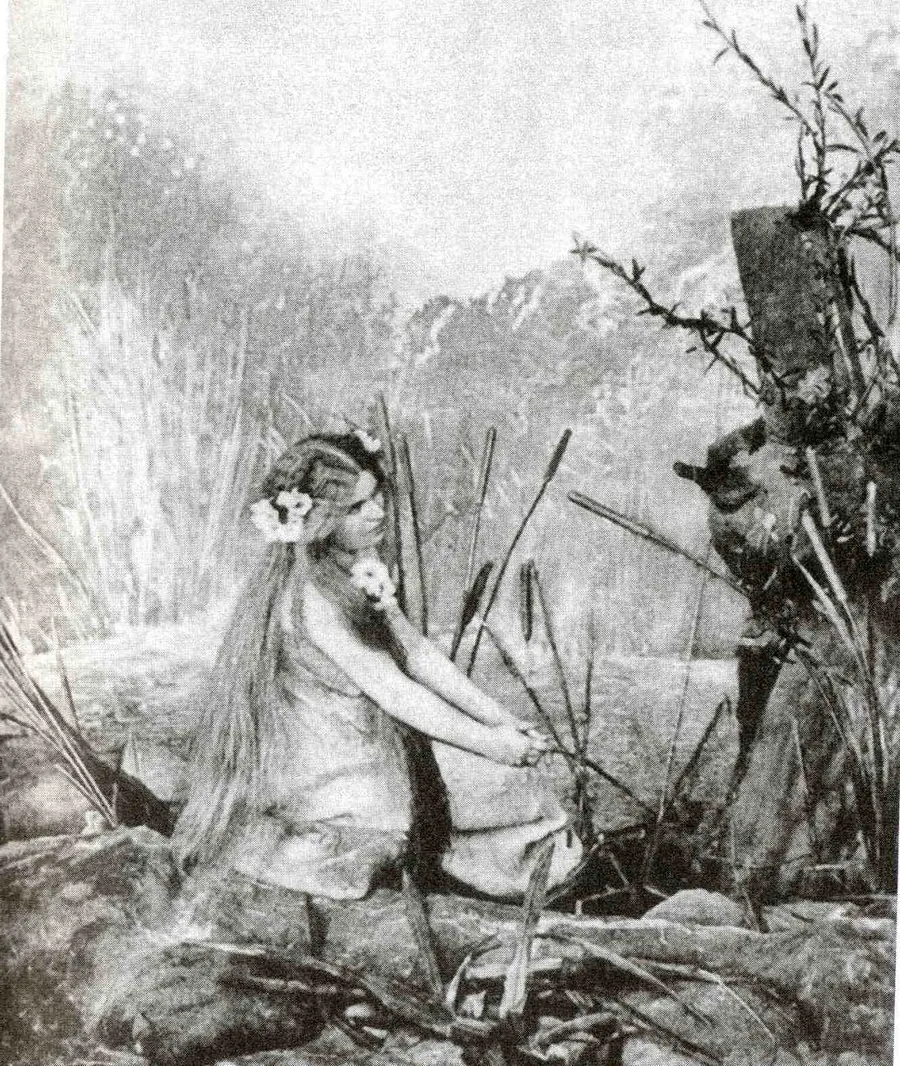
Song to the Moon
In the choir loft of the church at Třebsko, a village a short way from Vysoká, a new instrument was consecrated on his fifty-third birthday. He had paid for it, as a gift of thanksgiving for the safe return of himself and his family to Bohemia.
At Vysoká, at the beginning of August, he had sketched a set of piano pieces under the title New Scottish Dances, then thought better of the name and called them Humoresques; there were eight, and most were built on ideas he had jotted down in the sketchbooks he kept in America.
On the other side of the Atlantic, The Century Illustrated Monthly Magazine had printed an essay on Schubert under his name that July, put together with the critic Henry T. Finck. It counted the eleven hundred compositions of eighteen working years, and the poverty, and on the songs it gave a verdict: “In the Lied or lyric song, not only is Schubert the first in point of time, but no one has ever surpassed him.”
Prague heard the New World Symphony for the first time on the thirteenth of October, at the National Theatre, with Dvořák conducting, and three days later he left for New York again, this time with only his wife and their younger son, Otakar.
He was back at the conservatory on the first of November, and on the eighth he began a concerto for cello and orchestra. It had to be fitted round the teaching. In the middle of January he described his week to a composer friend in Prague: Mondays at the school, Tuesdays free, the other days more or less taken up, and when he did have the time, not always the mood for it. “Now I am finishing the Finale of the Violoncello Concerto,” he wrote. “If I could work as free from cares as at Vysoká, it would have been finished long ago.” He finished it on the ninth of February 1895.
In the middle section of the slow movement he had set the tune of one of his own songs, Lasst mich allein — leave me alone — from a set of four, a song said to have been Josefína's favourite, according to the Czech Dvořák Society.
He sailed from New York in the middle of April and was back in Bohemia on the twenty-seventh.
On the twenty-seventh of May 1895 Josefína Kounicová, Anna's sister, died. He went to her funeral on the twenty-ninth.
In May and June 1895, after her death, he went back to the concerto and rewrote its end. Near the close of the last movement he took out four bars and put sixty new ones in their place, ahead of the eight bars that finish the piece, and in the new passage, in the sudden quiet before the end, the tune of the song comes back, played by a solo violin in the orchestra.
That summer, at home, he and Anna decided not to go back to New York. Both of them had been homesick in the last year there, Anna even more than he.
He wrote to Simrock about the printing on the third of October. Wihan, to whom the concerto is dedicated, had wanted changes to a number of passages and had written a cadenza for the last movement, and Dvořák set out his terms. “I must insist on my work being printed as I have written it.” The harder passages could go in with easier versions beside them, but nobody was to alter anything without his consent, Wihan not excepted, and there was to be no cadenza, because there was none in the score, and he had told Wihan straight away that it was impossible to stick such a thing on.
Of the ending he wrote: “The finale closes gradually diminuendo — like a sigh — with reminiscences of the I. and II. movements — the solo dies down to pp (then swells again) and the last bars are taken up by the orchestra and the whole concludes in stormy mood. That was my idea and I cannot depart from it.” If Simrock agreed to all that, and to printing the titles in Czech as well, he could have the concerto and the Te Deum together for six thousand marks.
He took up his post at the Prague Conservatoire again on the first of November 1895, and that month he wrote a new string quartet, and in December he finished another that he had begun in New York, and two days before Christmas he wrote to a friend: “We are all, thanks be to God, well and rejoice to be able, after three years, to spend a happy and joyous Christmas in Bohemia!” He was working, he said, so easily that he could not wish it better. A week before, he and Anna had been in Vienna. “Brahms was tremendously pleased. We were together nearly all the time.”
On the fourth of January 1896 he conducted the first concert of a new orchestra in Prague, the Czech Philharmonic, and the New World Symphony was on the programme. In March he went to England for the ninth time, and on the nineteenth, at a concert of his works for the Philharmonic Society in London, the concerto had its first performance, with the English cellist Leo Stern as soloist and the composer conducting, on an evening when he also conducted his Eighth Symphony.
Stern had come from Leipzig to Prague beforehand and stayed more than a fortnight, at considerable expense, in a hotel, and they had worked at the concerto every day, as Dvořák told a friend in a letter written the day before Stern played it again in Prague, on the eleventh of April. “I worried at him more than enough,” he wrote; he had kept telling Stern that it was good and must be better still, until it was, and then he had taken him to London. The concerto was a great success there, and Stern had played it “to my complete satisfaction, though here and there I should have liked it a little different”, but one must not be so finical, he added, and must be glad to find somebody to play the concerto at all.
By then he was finishing the third of three orchestral pieces on ballads by Karel Jaromír Erben: The Water Goblin, The Noon Witch and The Golden Spinning Wheel. On the third of June 1896 the orchestra of the Conservatoire played all three through at a private concert in Prague that he had asked for, and their first public performances were given in London that autumn, under the conductors Henry Wood and Hans Richter.
In the middle of March 1897, having heard that Brahms was seriously ill, he went to Vienna to see him, and afterwards he wrote to Simrock that what he had heard was true: “Nevertheless let us hope that all is not yet lost!” Brahms died on the third of April. On the sixth, Dvořák was at his funeral.
That June the conservatory in New York asked him to come back as its director, and he said no.
On the seventeenth of November 1898 he and Anna had been married twenty-five years, and they kept the anniversary on the day itself with a second wedding: Otilie, their eldest, married Josef Suk, and Dvořák wrote to an old friend asking him to come to both, and to come without fail. A fortnight later, in Vienna, Gustav Mahler, the director of the Court Opera, conducted the first performance of Dvořák's symphonic poem A Hero's Song.
In November 1899 the Berlin Philharmonic played A Hero's Song, and he was to conduct it himself the next day, but he was, he wrote, “so indisposed that I had to leave Berlin with my wife without even seeing Simrock.” On the twenty-third of that month the National Theatre gave the first performance of his opera The Devil and Kate, and by Christmas he wanted another. The theatre's office put a notice in the papers to say that Dvořák was looking for a libretto.
Jaroslav Kvapil, a young poet and playwright who later became the National Theatre's literary adviser and then its director, had one. He told the story in print about ten years after the opera's first night. “In autumn of the year 1899, when I wrote the libretto 'Rusalka', I had no idea that I was writing it for Antonín Dvořák.” He had written it for nobody in particular, he said, with a secret hope that it might come to Dvořák's notice and no courage to take it to him; when the notice appeared, he went to the director of the theatre, and the next day the three of them met in the director's office beside the stage, and Dvořák listened to the director's opinion of the text and took the manuscript home with him.
It was a fairy tale about a water-nymph who longs for the love of a human prince, and is disappointed in it. Dvořák began the music on the twenty-first of April 1900. According to Kvapil he took the text as it was written, and asked for only one thing to be added, a song for Rusalka in the first act.
That year, Kvapil said, Dvořák often called on him on the way home from his morning round of the Prague railway stations. “Usually he would begin to speak about anything and everything but his opera: either about the engines he had just been inspecting or about pigeons.” Then he would forget why he had come, light the stump of his cigar, and go, without having come to the point.
For one conversation Kvapil had no answer ready. In the third act the Prince, out of his mind, lays a curse on heaven and earth and on God and all the spirits, and Dvořák did not like it at all. “Listen, I am a believer. I can't curse God in my music.” Kvapil had to explain at length that the libretto did not force him to do any such thing, and that a curse on the gods in a fairy tale was not a curse on the Lord God. Dvořák allowed himself to be persuaded, and set the words as they stood. He finished the third act on the twenty-seventh of November 1900.
Rusalka had its first performance at the National Theatre in Prague on the thirty-first of March 1901. Karel Kovařovic conducted, and the soprano Růžena Maturová sang Rusalka; an hour and a half before the start, as Kvapil told it, the tenor Karel Burian, who was to sing the Prince, sent word that he would not, and his understudy, Bohumil Pták, sang the part in his place. In the first act, at night, the water-nymph sings to the moon over broken chords from the harp, and asks it to stay a moment and tell her where the man she loves is. It is the Song to the Moon, and Maturová was the first to sing it. The critics were agreed about the music, its long lyrical melodies and the handling of the orchestra; they were less kind to Kvapil's libretto.
First thing the next morning, Kvapil said, Dvořák called at the theatre office in the best of moods, and the moment he saw him called out: “And now, quick, quick a new libretto!” Kvapil said he had none. Then he must write something quickly, Dvořák told him, while he still felt like it, and a nice part for Maturová. “I promised. Yes, I promised. But I did not keep my word.”
A letter came from Mahler in Vienna on the fourth of May. “After looking through the piano arrangement which the Czech Theatre was kind enough to send me, I should very much like to count on performing your opera Rusalka,” he wrote, but he would first need a German text. On the sixth of September Dvořák went to Vienna, taking the score with him, to talk it over.
That spring he had been made a member of the Upper House of the Austrian parliament, together with the poet Jaroslav Vrchlický, and on the fourteenth of May 1901 the two of them were presented there. The Vienna correspondent of a Prague daily paper, writing about Dvořák's short career as a legislator, said that each member had a desk in front of him with an inkpot, a sand-sprinkler, blotting paper, pens and several good pencils, and that Dvořák, greatly delighted with the pencils, took them all and put them in his pocket, and that outside he showed them to his wife, who had been waiting for him: “Look that will be grand composing now!”
He sat in the House that day and never again.
He was elected director of the Prague Conservatoire on the sixth of July. In September, for his sixtieth birthday, there were celebrations at Nelahozeves and in Prague, and the National Theatre began a series of nine evenings of his works. On the nineteenth of December Otilie had a son, Josef.
The new opera did not come. Early in 1902 a friend in Kroměříž, in Moravia, asked him to come and conduct there, and he wrote back that he could not promise anything. “I have been without work for more than 14 months, I cannot make up my mind to anything,” he explained, and until he found what he was looking for he must put everything else aside.
In February, with Vrchlický present, he said that he had been looking for a good libretto and not finding one, and Vrchlický reminded him that he had offered him one fourteen years before, about the enchantress Armida and a knight of the Crusades, and that Dvořák had turned it down, and in March he began to set it. That autumn he wrote to a friend in Vienna that he was at work on a big opera, and was happy that “after such a long rest I can work again at something that I want and not that others want.” In the same letter he said that a contract had come from Mahler for Rusalka.
He worked on Armida for more than a year, and rehearsals began at the National Theatre in November 1903. By the spring of 1904 the choral society in Kroměříž, Moravan, was preparing The Spectre's Bride for two concerts on the seventh and eighth of May, with Dvořák to conduct.
On the twenty-fifth of March 1904 Armida had its first performance, and during it he was taken ill and left the theatre before the end. The next day his doctor ordered him to stay at home and rest, and he spent most of the month that followed in bed. The Prague music journal Dalibor, which reported his last days, gave the illness as bladder trouble and influenza.
On Sunday the first of May he felt easier, and the doctor, after ten days in which he had not left his bed, allowed him to get up for his dinner. His wife and his son Otakar dressed him. A few minutes later, shortly after midday, he was “struck down by a heart stroke”, and he died in the flat in Žitná street. He was sixty-two.