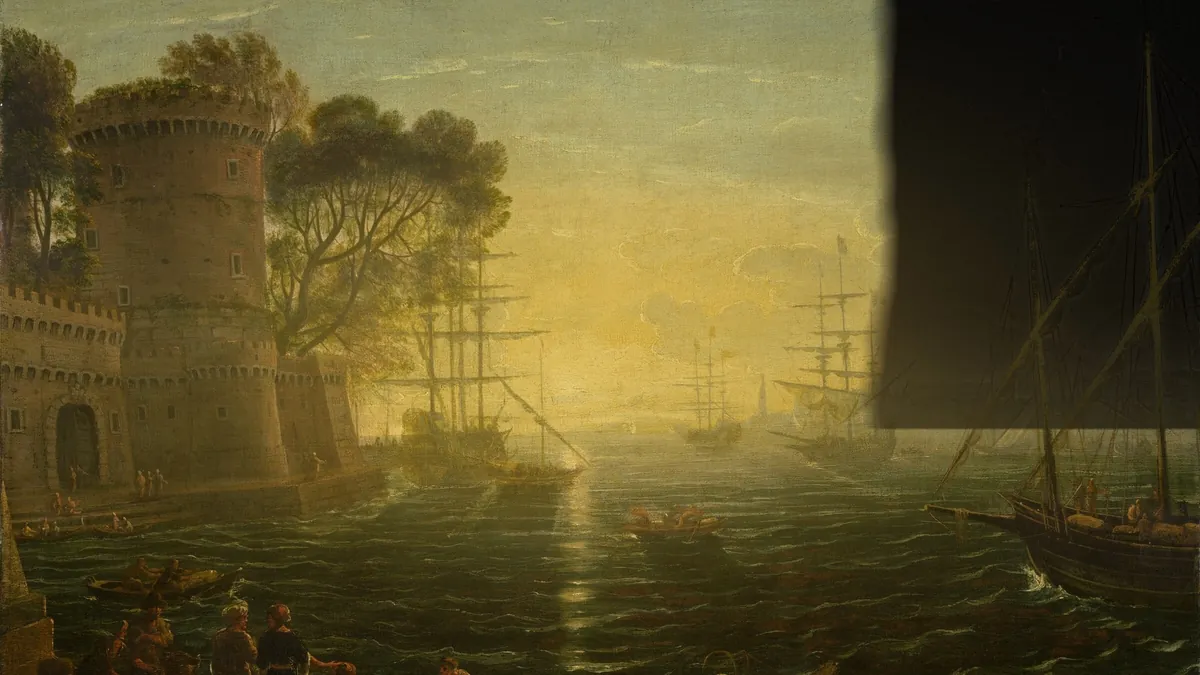
The First Relief of Orra
Marietta Voss trimmed the wick at a quarter past one in the morning, as her mother had taught her, and her grandfather had taught her mother.
She cut it square with the long scissors, a hair's breadth and no more, and wiped the black char from the blades onto the rag she kept in her apron. The flame steadied and rose. The great lens took the light and threw it out across the black sea, as it had every night for a hundred and ten years. She stood back and watched it burn. Then she went down the iron stair to the oil room and laid her hand on the casks.
Three were left, out of forty that had stood there on the first night of the dark.
She had stopped giving oil to the cottages on the fourth night and to the refuge kitchens on the sixth. The refuge burned tallow now, and fish oil when there was any, and the children went to bed in the dark at eight. The Lantern burned whale oil, clean and bright, and the Lantern burned every night. Ruth Annick had asked her on the seventh night whether they might not let it go out, just for a night or two, to save the oil for the people. Marietta had told her no, in a voice that had made Ruth go pale. Every boat in the Reach steered by that light. If it went out, the Reach would know Orra had fallen.
She went back up to the gallery and out into the cold.
The island lay below her in the dark. In eleven nights she had come to know this dark, and it was like no night she had ever kept, with no moon behind cloud and no glimmer on the water. Below the tower, inside the upper walls, the refuge was a cluster of shuttered glows. Below that, down the east slope, the lower terraces should have been dark, and they were not. Lanterns moved down there among the workshops, and she could hear voices with the western islands in them. The enemy had taken the terraces yesterday afternoon in a rush up from the boat slip. They had the forge and the cooperage and the rope shed and the lower cottages. Four of her people were dead on the stone down there, and Cal had come back through the gate with a crossbow bolt's furrow along his ribs.
And south, under the cliff, in the channel, the clearance craft were working the hulks.
She could hear them better than she could see them: the creak of tackles, the slap of oars, the groan of timber under strain. Their lanterns hung on sheerlegs rigged on two great rafts moored over the Throat. Now and then something white came slowly up out of the water into that light and climbed onto a raft. It stood dripping while the living men made a cable fast to whatever it had brought up. Then it went back down into the black water, and stayed down a long while, because it had no need to breathe.
They were cutting the stone out of the Edith and the Old Pruett, a block at a time. Once the stone was out, they would float the hulks clear. Then the big ships from the west would come through.
Beyond the cove, a mile out on every side, there were stars.
She had seen it on the second night, and Ruth had disbelieved her until she brought her up to the gallery. The dark was a bowl over the island. From up here she could see its rim: a ring all round, a mile off on the sea, where the black ended and the stars began. North, beyond the Kittle and over Holm Ennis, the stars shone. East, down the channel, they shone. And the middle of the bowl, where the dark was thickest and the rim was evenest all round, was the cove under the south cliff. There lay the little ugly ship that had come in on the twentieth with tugs to anchor in the cove, and had brought the dark with her.
Marietta could not have said how a ship made the dark. She knew it did, as she knew where the rocks lay.
"Aunt."
Cal had come up the stair, holding his side. He was thirty, long and dark like his father, and he moved like an old man tonight.
"You should be lying down," Marietta said.
"I can't sleep. Half the refuge is awake." He came to the rail beside her. "There's a light out there. North-east, outside the rim. It came an hour ago and went out again. Someone's out there, Aunt, without lamps."
"A fishing boat."
"Perhaps." He stared into the north-east. "Ruth wants you. It's the bread again."
"I know about the bread." But she went.
At half past two a boy came running up to the refuge from the lower cistern with his eyes like saucers and told her there was a light coming up out of the floor.
Marietta took Cal and a crossbow and went down. The lower cistern lay deep in the rock under the middle of the island, a long vault with the water black in it and steps going down into the water at one end. A light was rising toward the surface through a hole in the cistern floor she had never known was there, under a broken slab at the north end. The water churned, and a head came up, and a hand with a lantern. An old man with a white beard down his chest stood up waist-deep in her cistern and blew the water out of his mustache.
"Evening, Marietta," said Abner Daw.
She lowered the crossbow. "Abner. They told me you were taken off the Kittle."
"I was. Now I'm not." He climbed the steps, streaming. "I've brought you some people. Don't shoot them."
Three more came up after him through the hole in the floor: a tall gray-bearded man with a sword, a lean woman in a blue coat, and a big young woman with a mallet in her belt. They stood dripping on the cistern steps in the lantern light and looked about them.
"Mistress Voss," said the woman in the blue coat. "Commander Elske Marr, Compact Navy, of the Kestrel. This is Captain Rusk, who sails her, and Mistress Pell, our shipwright. We had your message at Southwick."
Marietta studied her, then the tall man.
"You're Tavin Rusk," she said. "Of Ember Roads."
"I am," Rusk said.
"Sallow was my sister's husband's island. She was on the beach." Marietta gave him a short nod. "She's in Southwick now, with three of her children. You took them off." She turned back to Marr. "How many ships have you brought me, Commander?"
"One, Mistress Voss," Marr said. "With food and oil in her, and forty-five people. She's lying two miles north-east of you, outside the dark."
"One." Marietta looked at her. "Well. It's one more than I had. What do you want?"
"Your island back," said Rusk. "And that ship in the cove."
They held the council in the cistern vault by lamplight, because it was the one place on Orra the enemy could not hear. They sat on the steps above the water.
Marietta told it plainly and fast. Four hundred souls in the refuge, a hundred of them children. Water enough, for the cistern was deep. Food for six days if they ate little, oil for three nights. Twenty fighting men and women with the island's crossbows, and Cal hurt. The enemy held the lower terraces with forty living marines, perhaps more, and the drowned walked up from the slip at night to stand at the foot of the upper walls. The clearance craft were on the hulks with thirty men and the drowned working underwater. And the little ship lay in the cove, with her guards.
"Has he spoken to you?" said Marr. "The Admiral. Their lieutenant said he'd offered terms."
Marietta took a folded paper out of her apron. It had been folded and unfolded a good many times. She held it to the lamp and spoke it in the same voice she had used for the stores.
"Mistress Voss. Your light has brought Sallow boats home for a hundred years, and my father's was one of them. I won't be the man who puts it out, so don't make me. Open the channel, and your tower, your refuge and your oil are under my hand, and no boat of mine touches Orra's stone. Keep it shut, and I come through anyway, and you know what comes with me. The Compact never came when you called. I have. Corven Vaust."
She folded it again and put it away.
"A boat brought that on the third night, under a white rag. There was a second on the sixth. I burned it without opening it."
"He doesn't waste ink," said Rusk.
"He writes like a man who means it," Marietta said. "I've buried six people since. That's what his protection is."
"That ship in the cove is the thing that makes the dark," Marietta said. "I can't tell you how. I can tell you where it ends." She told them about the rim and the stars.
Rusk and Marr exchanged a look.
"A mile," said Rusk. "All round her."
"About that," Marietta said. "A little more north, where the Kittle is. Not much."
"Their prisoners told us the dark comes from engines," Marr said. "Ships built round a machine. The one off Greyhaven made a dark that covered a whole town and the sea round it. This one covers a mile."
"A small one," said Nera. "Or a broken one, or a young one." She was turning her mallet over in her big hands. "If I can get aboard her, I can break whatever's in her. I don't care how it's made. If it's made, it'll break."
"And when it breaks?" said Marietta.
"Then the dark goes, if we're right about her," said Rusk. "And if it goes in daylight, every dead man on this island who's standing in the open falls down. We've seen that. Off Greyhaven, at sunrise, the light came in under the edge and they dropped where they stood. The living fought on. The dead didn't." He leaned forward. "So we do it by day. Out there past your rim, the sun comes up at ten past six. We wait until it's well up, so that when the dark breaks, the light comes down full and all at once. We start at a quarter to seven by your clock, Mistress. The ship in the cove should be broken by seven."
"Start what?" Marietta asked.
He told her. Marr's party would come in through the Cut before dawn: her marines, the Kestrel's fighting hands, as many as the boat could carry in two trips while the tide served. At a quarter to seven they would go out of the refuge's lower gate with Cal's crossbowmen on the wall behind them and take the terraces back, workshop by workshop. At the same moment the Kestrel would come round the eastern point into the channel under sail and fall on the clearance craft at the hulks, and pin them there. Every eye the enemy had would be on the terraces and the channel.
"And while they're looking," said Nera, "I go down to the cove and break her."
"How?" said Marietta. "The cliff path from the terraces goes right through their lines."
Nera turned to Abner. Abner turned to Marietta.
"There's the old overflow," he said. "Out of this cistern, south, through the rock. Your grandfather had it cut, Marietta, to carry off the winter water. It comes out on the south cliff above the cove. There used to be a stair down the cliff from there. The water-carriers used it before your father built the slip."
"That stair fell in when I was a girl," said Marietta.
"Some of it did," said Abner. "Not all."
"I'll guide you," Marietta said. "I'm the last who knows that stair."
"Mistress Voss, there's no need," Marr began.
"Commander. I've kept this tower eleven nights in the dark with four hundred people in it, and buried six of them. I know every stone of this island. You'll want me on that stair." She stood up. "But I give the signal first, from the gallery, with the lamp shutter, so your ship knows when to come in. Then I'll come down."
Rusk glanced at Marr. Marr glanced at Marietta and nodded.
"A quarter to seven," Marr said. "By your clock."
The Kestrel's boat made two trips through the Cut before the tide shut it. On the first it brought Marr's people. There were Dunning the sergeant and seven marines with pikes, and half a dozen of the ship's hands with an axe apiece. On the second it brought food: sacks of biscuit and peas and a cheese, handed up through the hole in the cistern floor from man to man. It brought oil. Two casks of it came up out of the water on ropes, and Marietta stood on the steps with her hands shut in her apron and watched them come.
The man who brought the oil up was old and gray and brown-faced, with a ragged beard and an orange cat riding on his shoulder, dry as a bone.
"Enoch Garvey, Mistress," he said. "Bosun. Shipkeeper. Cat's Pudding. She's never been in a cistern before, so she'll want to see everything."
"Get her off my water," said Marietta.
Enoch set the cat on the steps, where she regarded the cistern, the lamps and the keeper of the Lantern of Orra with equal contempt, and sat down to wash.
Rusk went back on the second boat to bring the Kestrel in. Before he went down through the hole he stood on the steps with Marietta.
"Your sister," he said. "Is she well?"
"She's alive. She doesn't sleep." Marietta held his eye. "I didn't say it to thank you, Captain. I said it so you'd know what I know."
"I understood you."
He went down into the water. Marietta stood by the hole and watched his lantern go away under the rock until it was gone.
At half past six she was on the gallery with Cal beside her and the shutter lamp ready.
From up there she could see it all. Below the tower the upper walls ringed the refuge, and down the east slope the lower terraces stepped toward the boat slip, with the enemy's lanterns moving among the workshops. South, under the cliff, the deep channel ran east past the island to the open Reach. In the Throat lay the two rafts over the hulks with their sheerlegs and lanterns, and the cove under the cliff held the little ship. And a mile out on every side, there was the rim.
It was not black anymore. Out beyond it, the sun was up.
She had not seen that before, because she had never been on the gallery at dawn with the rim in her eye. The dark lay over Orra like a lid. But the sea beyond the rim was gray and silver and growing brighter, and a mile to the east, at the mouth of the channel, the water shone. The island sat in a well of night with the morning all round it, a mile off, and could not reach it.
The clock in the lamp room behind her struck the three-quarters past six.
"Now," said Marietta.
Cal swung the shutter. Long, long, short. Long, long, short. The great light swept out over the sea and blinked, and blinked, and blinked.
Below the refuge wall the lower gate banged open. She heard Marr's voice, sharp and high, and saw the marines' lanterns go out through the gate and down onto the first terrace in a wedge. Cal's crossbowmen rose along the wall and shot over their heads into the workshops, a ragged clatter of strings and a scream. The enemy's lanterns down there swung and bunched. Men were shouting in the western tongue. Then the marines were in among them, and she heard steel.
"Aunt," said Cal. "The channel."
She turned. Round the eastern point of the island, out of the silver morning beyond the rim, came a ship.
She came in under topsails with lanterns at her yards. As she crossed the rim into the dark, Marietta saw her clearly for a breath, a gray two-masted ship with the light on her sails. Then the dark took her, and she was a cluster of lanterns coming up the channel fast, with the morning breeze behind her. The rafts at the hulks saw her too late. Their boats were scattering like startled ducks. The ship came straight up the channel toward the Throat, and along her side the crossbows began to go, slam after slam, flashes of lamplight off steel in the dark. Men on the rafts went down.
The craft at the hulks were caught. The hulks lay across the Throat behind them, and the ship was before them, and the cliff was on one hand and the Brack on the other. Two of their boats tried to slip past the hulks to the west, and a crossbow bolt took one of them and she spun round in the channel with her oars every which way.
"Go," said Cal. "Go, Aunt. I've got the light."
She went.
She went down the tower stair and through the refuge and down to the lower cistern faster than she had moved in ten years. Nera Pell was waiting at the overflow with Dunning, two marines, the boy Joss with a lantern, and a docker with an axe. Nera had a long iron bar and a sledge-maul on her shoulder.
"Follow me," Marietta said. "Mind your heads. Mind your feet. If I stop, you stop."
The overflow was a tunnel cut in the living rock, four feet high and full of water to the knee, black and freezing and stinking of weed. It went south for two hundred yards, and they went down it bent double with the lantern swinging, with the cold water sucking at their legs. Marietta led. She had not been in it since she was ten, and she remembered every turn.
It came out in the face of the south cliff, in a slot of rock above the cove, and the cold air came in to meet them with the sound of fighting in it.
Marietta stopped in the mouth of the slot and looked down.
The cove lay sixty feet below, a little bight of black water under the cliff. The ship was there. She lay at anchor with a cable run to a ringbolt on the rock. She was short and broad and squat, barely sixty feet long, with an iron-sheathed deckhouse amidships and no masts at all. Lanterns burned on her deck. Six men stood at her rail, looking east toward the channel where the fighting was, and there were pale shapes in the water round her, standing chest-deep on the ledges of the cove like posts.
And between the slot and the cove was the stair.
It was cut into the face of the cliff in the rock, a hundred narrow steps zigzagging down. Half of it was gone. Where it had fallen there were gaps, and old iron pins in the rock where a handrope had once run.
"Walk where I walk," Marietta said. "Put your hands where I put mine."
She went down.
She went down as she had at ten, with her face to the rock and her hands finding the pins. The steps were wet with spray. At the first gap she swung across on two pins, feeling for the step beyond with her toe. She heard Nera breathing behind her, and the sledge-maul's head scraping on the rock, and Dunning swearing in a whisper. Below, the fighting in the channel filled the dark with shouts and the slam of crossbows. On the ship below, every face was turned toward the channel.
Twenty feet from the bottom, one of the marines slipped.
He did not fall. He caught a pin with one hand and hung there, and his pike went clattering down the cliff and into the water of the cove with a splash.
On the ship, six faces turned up.
"Down!" Marietta said. "Down, quick, all of you, now!"
They went down the last twenty feet anyhow, half sliding, half jumping, onto the slab of rock at the cliff's foot where the ship's cable ran. A crossbow bolt struck the rock beside Marietta's head and went whining off. In the water round the ship the pale shapes had turned, and were wading toward the rock.
Marietta had her crossbow off her back. She knew a crossbow as she knew her own hands, and her hands did it without her: foot in the stirrup, string to the nut, bolt in the groove, up. The man on the ship who had shot at her was spanning again. She shot him through the shoulder, and he fell back from the rail.
"The cable!" said Nera. "We go along the cable!"
It ran from the ringbolt to the ship's prow, ten yards over the water, thick as a man's arm and sagging. Dunning went first, hand over hand, hanging beneath it with his feet hooked over. A dead man rose out of the water under him and reached for his boots. Joss leaned out from the rock with the lantern pole and struck it in the face, and it fell back. Nera went second. She went along that cable like a ship's cat with the maul slung on her back, and Marietta saw her go over the rail onto the deck and come up swinging.
Then Marietta went. Behind her on the rock the docker and Joss and the last marine were holding the dead off the slab with axe and pike and pole.
She did not look at the water under her. A white hand came up out of it and closed on air beside her ankle, and then there was the rail, and she came over it onto the deck on her knees.
The deck was a fight. Dunning had his back to the iron deckhouse and was holding two living men with his short sword. Nera had knocked a third down with the maul and was standing over him. The rest were coming along the deck from aft with swords. And the dead were climbing the ship's side, out of the cove, their white hands on her rail all round.
"Pell!" Dunning bellowed. "The hatch! Get below! We'll hold!"
The hatch stood in the deckhouse, iron-lidded. Nera dropped the maul through it and went down after it. Marietta spanned her crossbow again on the deck, with her back to the deckhouse beside Dunning. She shot a dead man off the rail, though a bolt through the chest did nothing to him but knock him back into the water. She spanned again. A western marine came at her with a sword and Dunning took him, steel ringing on steel. Over the side came Joss and the docker and the marine, scrambling, with the dead behind them.
Below her feet, through the iron, she heard the maul.
It struck, and something rang like a great bell struck under water, a deep shuddering note that she felt in her teeth. It struck again, with a screech of metal and a sound of splitting wood. Then she heard a hum falter, a hum she had never noticed until now. It had been there all along under the deck, under the night, a low steady hum. It stuttered, and climbed, and Nera's maul came down a third time.
The dark went out.
The morning came down onto Orra all at once, and Marietta was looking up into blue sky, with the sun standing over the eastern sea.
All round the ship's rail, the dead fell.
They stiffened where they hung, and their hands opened, and they dropped back into the water of the cove with a long ragged splashing and floated face down among the weed. The one with his hands on Dunning's coat went rigid and slid down and lay on the deck at his feet. Up the cliff, along the terraces, out on the rafts at the hulks, she saw the same thing: white figures standing in the sun as if listening, and then going down.
The living western marines on the deck stood frozen, staring up at the sky. One of them dropped his sword. The others followed.
Marietta turned to the west.
Two miles off, beyond the western mouth of the channel, a wall of black stood on the sea from the water to the sky. It ran north and south out of sight, sheer as a cliff, with the morning sun lying full on its face and making no mark on it. It had stood out there on the western sea for a fortnight, and it had never come nearer.
Between the wall and the island the strait lay open in the sunlight, blue and glittering. The enemy's boats were pulling west across it as hard as they could go for the shelter of the black. On the terraces below the refuge, men in western coats were running down to the slip and throwing themselves into boats. In the channel the Kestrel lay across the Throat with her crossbows bearing and her sails gold in the sun, and on her quarterdeck a tall gray man had taken his hat off.
They found the wardwright in the frame room.
Marietta went down the hatch after Nera when the fighting was done, with a lantern, because the frame room had no light but what came down the hatch. It was a low iron-walled space amidships, below the waterline, smelling of hot metal and pitch. In the middle of it stood what was left of the machine.
It had been a lattice, Marietta thought, a great cage of bronze bars and black wood, taller than a man and wider than a door, standing on its end. The bars were scored all over with fine marks, and some of the marks still glowed faintly green in the lantern light, like the fox-fire on rotten wood. Nera had broken it in three places. One whole side of the cage had sheared and folded in on itself, and black splinters stood out of it like broken bones. The floor was littered with bronze and wood. Nera stood over it with the iron bar in her hand, breathing hard, staring at what she had done.
Behind the wreck, crouched in the corner against the iron hull, a man was weeping.
He was in his forties, thin and balding, with ink on his fingers and spectacles hanging from one ear. He held up his hands as the lantern found him.
"Don't," he said. "Please. Please don't. I'm not a soldier. I made it, that's all. I only made it. My name is Tomas Ebb. I'm a wardwright. I'll tell you anything. Only don't give me to them, and don't leave me here with that."
He pointed with a shaking hand. Marietta turned the lantern.
Under the fallen side of the frame, pinned to the deck by a heavy bronze bar across his back, there lay a man. He was sodden, in sea boots and a seaman's smock, with his face turned sideways on the iron and his eyes open. His hands were moving. They scraped at the deck, slowly, patiently, the fingers opening and closing. The sun had not reached him. Down here in the iron box below the waterline, no daylight came.
Marietta looked at him a long while.
"Nera," she said. "The dark's gone. Why is he moving?"
"I don't know," said Nera. Her voice was very quiet. "I broke the thing that made the dark. I didn't break whatever it is that moves them."
Ebb made a small sound in the corner.
"Shut the hatch on him," said Marietta. "And put a man on it."
Marr came down the cliff stair an hour later, when the terraces were clear, with her coat torn and her sword in her hand. She heard Ebb out in the sunlight on the Lamb's deck, which was what he called the ship. She heard him beg, and she looked at him with no expression at all.
"You will have the protection of the Compact," she said. "You will be held under guard, fed and kept safe, and you will not be harmed. In return you will tell us everything you know, Master Ebb, and if I find you have lied to me in any part of it, the protection ends." She turned to Dunning. "Two men on him. At all times."
"And the big dark?" Marietta asked Ebb. "Out there in the west?"
Ebb looked toward the black wall on the sea, and shivered.
"One of the great engines," he said. "Bounty, I think. They keep her anchored out in the western approach, to cover the road from Lisk." He swallowed. "She's nothing like the Lamb, Mistress. The Lamb was a trial. A little one. The great ones are armored, and a hundred times her strength."
The Kestrel came round to the boat slip at noon, and the food came up the terraces on men's backs, sacks and casks and the cheese, and the oil came up after it. Marietta stood at the top of the slip and saw every cask carried to the oil room under her eye. She told the man who dropped one that she would see him hanged. She went down to the refuge kitchens and gave Ruth Annick a whole sack of peas and two hams, and told her to feed the children first and feed them till they were full.
In the afternoon she walked the island with Rusk and Marr. They looked at the Cut and the overflow, and at the Mare's Gut south of the Brack. Abner said a boat could come and go by the Gut at half tide without being seen from the west. Between the two, Rusk said, there was a road in and a road out. Food could come in. Children could go out, to Holm Ennis and the inner islands, if it came to that.
"It won't come to that," said Marietta.
"I hope not," said Rusk.
She stood on the terrace with him and looked out at the black wall in the west. She thought he was a man who would always take the people off the beach and never mind the price. She thought Marr was a woman who would reckon the price to the last penny and pay it anyway. She liked Marr better.
That night the Lantern burned on whale oil from the Kestrel's casks, clean and bright. Marietta trimmed the wick at a quarter past one and went out onto the gallery. Rusk was there already, at the rail.
The stars were out over Orra. All of them. She had not seen them from her own gallery in eleven nights, and she stood and looked up at them, and the cold air smelled of salt and weed and nothing else.
Two miles to the west, where the wall stood, the stars ended in a great black blot whose edge ran straight down to the sea.
"Mistress Voss," Rusk said quietly. "Look there. Under the dark. On the water."
She looked. At first she saw nothing. Then she saw lights, low on the sea, inside the black, far off in the west. A great many lights, crawling. They moved very slowly from north to south in a long line, some large and some small, with the small ones bunched about the large ones as tugs bunch about a ship they are towing. As she watched, more came out of the north behind them, and more.
"That's no fishing fleet," said Marietta.
"No," said Rusk. "And it's no fleet of ours. We haven't got one."
Marietta watched the lights crawl until she had counted eleven of the large ones, and then she left off.
"Then the children go off my island," she said. "Tomorrow, on the afternoon flood, through the Kittle. Find me boats, Captain, and I'll find you the people to fill them."